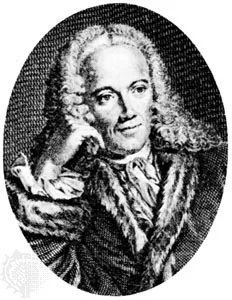
François Quesnay didn’t just study economics. He essentially invented its scientific method.
Before Adam Smith wrote The Wealth of Nations, before David Ricardo mapped out comparative advantage, there was a group of 18th-century French thinkers who believed the answer to national prosperity lay in the soil. They called themselves économistes. History later labeled them physiocrats.
The term means “rule of nature.” And for them, natural law wasn’t just a philosophical concept. It was an economic blueprint.
The Origin of the Word “Physiocracy”
The word itself tells you everything about their worldview. Physiocracy comes from the Greek words for “nature” (physis ) and “rule” (kratos ).
The school of thought emerged in France in the 1760s. But it wasn’t born in a university lecture hall. It started in the apartments of François Quesnay.
Quesnay was the court physician to Madame de Pompadour and later King Louis XV. He was a doctor first. His understanding of blood circulation and the body’s ability to heal itself shaped his economic theories. He saw the economy as an organic system. Like the body, it had natural rhythms. Like the body, it could be sick if treated with harsh medicine.
That “medicine” was government regulation.
Breaking Away from Mercantilism
To understand why physiocracy was radical, you have to look at what it was fighting against.
Mercantilism dominated Europe. The prevailing belief? Wealth was finite. It existed in the form of gold and silver bullion. To get richer, a nation had to export more than it imported. Governments imposed strict tariffs, subsidies, and controls to hoard metal and protect domestic manufactures.
Quesnay and his followers hated this.
They argued that wealth wasn’t static. It could be created. And the only thing that created new wealth? Agriculture.
“Wealth consisted solely of the products of the soil.”
To the physiocrats, manufacturing was sterile. It just reshaped materials. Trade was a zero-sum game. Only farming generated a “net product” (produit net ). This was the surplus left over after all costs were covered. It was the only true addition to a nation’s riches.
This was a direct attack on the mercantilist obsession with coins and complex trade regulations. The physiocrats wanted labor and commerce free from restraint.
The Tableau Économique
In 1758, Quesnay published his most famous work: the Tableau Économique (“Economic Picture”).
It was a chart. A simple, schematic diagram.
It mapped the flow of money and goods between three main classes:
- The Productive Class: Farmers and agricultural workers.
- The Proprietors Class: Landowners, including the nobility and the church.
- The Sterile Class: Artisans, merchants, and manufacturers.
The Tableau demonstrated that wealth only flowed from the land to the rest of society. Without the agricultural surplus, the sterile class had nothing to process. The proprietors had nothing to spend.
The logic was tight. If you taxed farmers too heavily, the cycle broke. If you restricted trade, the surplus shrank. The economy would stagnate.
Who Were the Physiocrats?
Quesnay’s salon at Versailles became the hub for economic debate. But he wasn’t alone.
His first major disciple was Victor Riqueti, Marquis de Mirabeau. Mirabeau wrote Explication du Tableau économique in 1759 and Théorie de l’impôt in 1760. He expanded on Quesnay’s ideas, arguing for a single tax on land.
Then came Pierre Samuel du Pont de Nemours. Arriving in Quesnay’s circle in 1763, du Pont became the school’s chief evangelist. He published Quesnay’s writings under the title La Physiocratie in 1767. That’s where the name stuck.
Other key figures joined the fold:
* P.P. le Mercier de la Rivière
* G.F. le Trosne
* The abbé Nicolas Baudeau
* The abbé P.J.A. Roubaud
Du Pont and Roubaud used journals like the Gazette du commerce to spread their ideas. Baudeau edited the Ephémérides du citoyen. They were building a media empire for free-market agrarianism.
Why the School Collapsed
The ideas were logical. They were systematic. But they were also deeply contradictory.
The physiocrats claimed to believe in natural liberty. Yet they believed the government should fix interest rates. They praised the cultivator but assigned all the wealth to the landlord. They talked about fair prices but ignored the complexities of market fluctuation.
They were a blend of conservative feudalism and revolutionary free trade.
By 1768, the school was already in decline. The political winds were shifting.
In 1774, Jacques Turgot became comptroller general. Turgot wasn’t a physiocrat, but he shared their belief in deregulation. The physiocrats rallied around him. They saw a chance to implement their theories at a national level.
It was a mistake.
Turgot’s reforms threatened the entrenched interests of the nobility and the guilds. He was accused of letting theorists run the government. He was dismissed in 1776. The leading physiocrats were exiled. The movement died.
The Lasting Impact
You might think the collapse of the school means their ideas were wrong.
But look closer.
Many of their core tenets survived. Their free-trade theories influenced the Anglo-French commercial treaty of 1786. The French Revolutionary decree of August 29, 1789, freed the grain trade, a direct victory for physiocratic principles. The land tax established by the Constituent Assembly in December 1790 followed their precepts.
Even Adam Smith respected Quesnay. He called him a great man. Smith’s own work was, in many ways, a correction of physiocratic errors, not a rejection of their scientific approach.
David Ricardo eventually demolished the idea that land was the only source of wealth. But he used the same rigorous, logical methods the physiocrats pioneered.
The specific doctrine—that only farmers create wealth—was flawed. The method—that economics should be a science of natural laws, not political favoritism—was right.
The physiocrats didn’t win the argument about what constitutes wealth. But they changed how we ask the question. They moved economics from moral philosophy to analytical science.
And that shift still matters today.