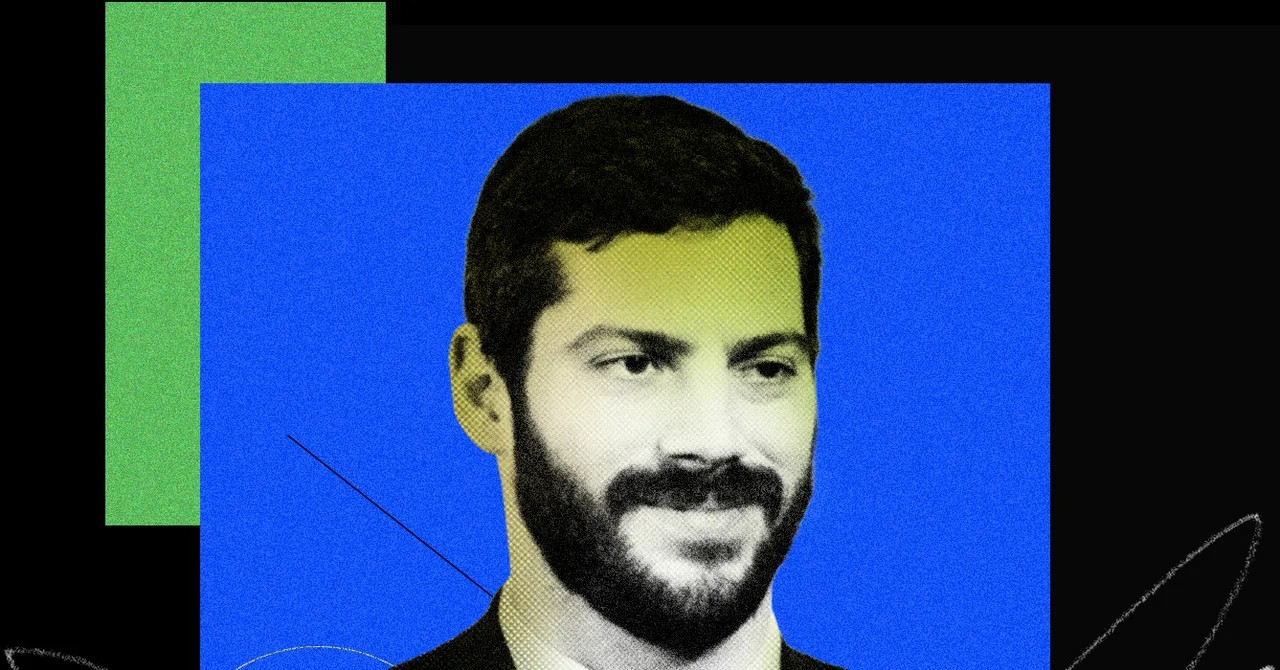
In the high-stakes arena of New York politics, a peculiar battle is unfolding. It is not a fight between traditional ideological opposites, but rather a clash between the architects of the digital age and a lawmaker who used to be one of them.
Alex Bores, a Democratic member of the New York State Assembly, is currently running for Congress in New York’s 12th District. While his opponents include high-profile figures like Jack Schlossberg and George Conway, Bores faces a unique threat: a massive influx of capital from the very industry he seeks to regulate.
A super PAC titled “Leading the Future” —funded by heavyweights such as OpenAI’s Greg Brockman, Palantir co-founder Joe Lonsdale, and the venture capital giant Andreessen Horowitz—is aggressively campaigning against him. Their target? Bores’ push for rigorous AI safety protocols.
From Big Tech to the Assembly Floor
Bores is not a career politician in the traditional sense; he is a technologist. With a master’s degree in computer science and experience at the data-analytics giant Palantir, he possesses a level of technical literacy that is vanishingly rare in government.
During his time at Palantir, Bores worked on high-level data integration, helping organizations like the Department of Justice track complex patterns in financial data—a process that helped recover $20 billion for taxpayers during investigations into the Great Recession. However, his departure from the tech sector was driven by ethics. Bores resigned after Palantir declined to implement contractual guardrails to prevent its software from being used by ICE for mass deportations.
“I want to find a way to have tech work for us and not the other way around,” Bores explains.
This philosophy has defined his legislative career. Bores has transitioned from being “downstream” of bad policy—trying to fix systemic issues with better tools—to being “upstream,” attempting to design the laws that govern those tools from the start.
The RAISE Act: A Target for Innovation Advocates
The primary friction point between Bores and Silicon Valley is the RAISE Act (Responsible AI Safety and Education), a piece of New York legislation that Bores helped spearhead. The law targets the “frontier” of AI—the largest developers like OpenAI, Google, Meta, and Anthropic—and mandates:
- Public Safety Protocols: Large firms must publish and adhere to clear safety testing plans.
- Incident Disclosure: Companies must report critical safety failures to the government.
- Ongoing Oversight: The establishment of a state agency to monitor AI development and suggest updated regulations.
To the tech elite, these requirements are viewed as “handcuffs.” The super PAC supporting Bores’ opponents argues that such regulations are ideologically motivated and will stifle the United States’ ability to lead in global AI innovation and job creation.
The Regulatory Vacuum
The conflict highlights a massive gap in American governance. While technology evolves at an exponential rate, federal regulation remains largely stagnant. Bores points out a startling statistic: out of 435 members of Congress, only two Republicans hold computer science degrees, and Bores is poised to be only the second Democrat in Congress with such a background.
This lack of expertise has created a vacuum that states like New York and California are attempting to fill. However, this “bottom-up” approach to regulation has met fierce resistance from the federal level. Bores notes that recent executive actions have attempted to use the threat of withholding federal broadband funding to discourage states from passing their own AI safety laws.
Why This Matters
The fight for New York’s 12th District is more than a local primary; it is a litmus test for how much power tech giants should wield over the legislative process. If Bores succeeds, it signals a shift toward proactive, technically informed oversight. If the super PAC succeeds, it reinforces a landscape of minimal regulation, driven by the belief that innovation must remain unencumbered by state-level guardrails.
Conclusion: The battle between Alex Bores and Silicon Valley’s most powerful donors represents a fundamental question for the 21st century: Should technology be governed by those who build it, or by those elected to protect the public interest?