


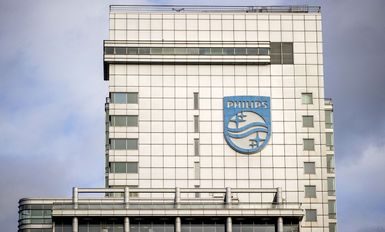
Royal Philips is a Dutch multinational giant. You know the name. You probably own one of their products right now. From LED lighting in your bathroom to medical imaging machines in hospitals, Philips touches nearly every corner of modern life. But the company’s history isn’t just a timeline of successful gadgets. It is a masterclass in how a company can dominate a market by defining standards, only to lose the hardware war to faster competitors.
The Autocratic Foundation
Frederik Philips and his engineer son Gerard founded the company in 1891. Gerard was obsessed with longevity. He didn’t just want lightbulbs that worked; he wanted them that lasted. He optimized production to match his experimental improvements. Then his brother Anton joined. Anton brought the sales pitch.
The result was a hybrid monster. It had high-tech engineering at its core and aggressive commercial expansion at its throat. The management style was autocratic. The Philips family ran things until 1977, holding immense sway into the 80s. They treated workers like family. Literally. They built housing. Schools. Hospitals. Starting in 1900, they even provided free medical care. It was a paternalistic empire.
But this culture had a downside. Speed.
Philios often prioritized high quality over low cost. They were slow to market. This trait would haunt them for decades. They would invent the future, then wait too long to sell it.
The Phoebus Cartel and Wartime Maneuvers
World War I was a windfall for Philips. The Netherlands stayed neutral. While Europe burned, Philips captured new markets. By 1919, they were already making radio tubes. In 1927, they dropped a simple, affordable radio. By 1933, they were the world’s largest radio manufacturer.
But their grip on the lighting market was even tighter—and darker.
In 1924, Philips joined forces with General Electric and Germany’s Osram. They formed the Phoebus cartel. This wasn’t a partnership for innovation. It was a conspiracy to fix prices and kill competition. The cartel set the standard lifespan of a lightbulb at exactly 1,000 hours.
Critics argued the cartel stifled innovation for decades. Why make a bulb last 10,000 hours if you can sell ten that last 1,000?
Philips benefited from this artificial ceiling. They shifted production out of the Netherlands in the 1930s to dodge Great Depression import controls. Just before WWII, they moved their headquarters to Curaçao to stay out of German hands. The war years were controversial. Philips did business with the occupiers. It’s a stain on the record that historians still debate.
The Cassette Victory and the VCR Defeat
Post-1945, Philips pivoted hard. They entered the personal care market with the Norelco electric razor in 1947. Then came hair removal tools. Electric toothbrushes. They built a empire of bathroom electronics.
But their most brilliant move was also their most generous.
In 1963, Philips launched a small, battery-powered audio tape recorder. It used a cassette. Not loose reels. A cassette.
Here is the key decision. Philips licensed the cassette technology royalty-free to other manufacturers.
They could have kept it proprietary. They could have charged fees. Instead, they let everyone else build cassettes. The format won. It became the global standard for audio. This is a prime example of why Philips dominates consumer electronics through licensing rather than hardware sales. They won by making their standard unavoidable, not by selling the most boxes.
They tried this again with video. In 1971, Philips demonstrated the first VCR.
They were slow.
Sony and JVC moved faster. Betamax launched in 1975. VHS followed in 1976. Philips didn’t start making VHS players until 1984. They lost the format war. They tried again with LaserDisc in 1978. It failed. But LaserDisc led to the Compact Disc (CD).
The CD Alliance and Missed PC Opportunities
The CD was a different story. Philips partnered with Sony in 1979. They cut deals with music labels. The format succeeded because of that alliance. It wasn’t just hardware. It was an ecosystem.
Philips failed to replicate this in computing.
They launched the P-1000 mainframe in the mid-1960s. IBM 360 had already won. In the 1970s, their minicomputers did okay. But they missed the personal computer revolution entirely. In 1986, Philips released a PC with a proprietary operating system. It was years after Microsoft’s MS-DOS became the standard.
By 1992, Philips exited the computer hardware business. They stayed on as a component supplier. It was a retreat.
Their later consumer electronics attempts were equally mixed. They bought Magnavox in 1974 to crack the US market. They fought Japanese rivals and lost ground. In 1991, they launched the CD-I. A multimedia player for the living room. It was expensive. It lacked the power of PCs. It failed.
In 1992, they tried digital audio with the Digital Compact Cassette. It faced off against Sony’s MiniDisc. Both formats flopped commercially. The market wanted convenience, not high-fidelity digital experiments that cost extra.
The Legacy of “Slow and Steady”
Philips is still here. It’s just not the flashy gadget maker of the 1970s and 80s. The company that invented the cassette and the CD is now a medical technology and lighting company.
The trade-off is clear. Philips prioritized engineering purity and long-term standards over market speed. They won the war for the audio cassette by being generous. They lost the war for VHS by being cautious. They lost the PC market by refusing to adopt open standards.
Is it better to be first, or to be right? Philips spent a century answering that question. The answer, it turns out, is complicated. You can define the format and still lose the revenue. You can own the infrastructure and still miss the consumer wave.
From Electronics to Imaging
The pivot wasn’t immediate. It was a slow burn fueled by the company’s existing expertise in lighting and electronics. When the 1980s rolled around, Philips looked at its portfolio and saw an opening in medical technology. The first major move was acquiring Gould, Inc.’s X-ray and diagnostic imaging business. That was just the toe in the water.
Then came the heavy lifting.
In 2001, Agilent Technologies’ Healthcare Solutions joined the fold. This added patient monitoring and cardiac care tech to the mix. But the real game-changers were the later acquisitions.
Respironics came in 2008. A $5 billion deal. It didn’t just add revenue; it cemented Philips as a dominant force in ventilators, CPAP machines for sleep apnea, and oxygen concentrators.
Volcano Corp. followed in early 2015. That was a $12 billion buyout. Suddenly, Philips wasn’t just a player in cardiovascular imaging. It was a leader.
By the time those deals closed, Philips was already producing portable defibrillators, ultrasound systems, and CT scanners. They had manufacturing and marketing arms spread across the globe. The shift was so complete that in 2013, they dropped “electronics” from their official name. They became Royal Philips NV.
Cutting the Cord
With medical devices, oral and hair care, and small appliances driving the majority of earnings, the old guard was becoming a liability. The consumer electronics business was bloated. It was time to streamline.
The writing was on the wall in 2008. Philips stopped making TVs. They stopped making stereos. They stopped making the big boxy electronics of the previous decade. Instead, they licensed the Philips and Magnavox names to Funai, a Japanese manufacturer.
But that wasn’t enough.
In April 2014, Philips sold its consumer electronics division, then known as WOOX Innovations, to Singapore-based Gibson Brands. The previous attempt to sell to Funai had failed. Gibson made the cut.
The separation continued. In 2016, Philips spun off its longest-running product line: Philips Lighting. It became Signify (PHPPY).
Then came the final nail in the consumer appliance coffin. In 2021, Philips sold its domestic appliance business to Hillhouse Capital, a private equity firm, for $4.4 billion.
The New Core
The Philips name still sits on some electronics, small appliances, and lighting products. But that’s through licensing agreements now. It’s not manufacturing. It’s branding.
As of 2024, the revenue engines are different.
Medical technology.
Home health solutions.
Hair and oral care.
The company that once defined the living room with its TVs now defines the hospital room with its imaging systems. The shift wasn’t just a change in product. It was a change in identity.
There’s a trade-off here. You lose the massive scale of consumer goods. You gain higher margins in specialized medical tech. But the market for medical devices is ruthless. One bad recall. One regulatory hurdle. The gains from an acquisition like Volcano Corp. can evaporate fast.
Philips isn’t just selling hardware anymore. It’s selling outcomes. Patient monitoring. Cardiac care. Sleep apnea relief.
It’s a cleaner balance sheet. A more focused mission.
But is it sustainable? The dependency on high-cost acquisitions means the pressure to integrate is constant. The margin between success and obsolescence in medical tech is thinner than it was in consumer electronics. You don’t just need a good brand. You need to keep up with innovation cycles that move faster every year.
The name remains. The core has shifted. What happens next

