Renault sits in Boulogne-Billancourt, the heavy heart of France’s automotive industry. It is the largest manufacturer and exporter in the country. The French government still holds a controlling stake, making it one of the most recognizable corporate brands in Europe. But this isn’t just a story about sleek cars. It’s a narrative of war, government seizure, global missteps, and survival.
The firm began in the late 19th century as Renault Frères (“Renault Brothers”). Louis Renault, Marcel, and Fernand started small. Louis had built his first minicar at home. That initial model featured direct transmission—a novelty at the time. Orders arrived in 1899. Racing victories followed quickly. The brothers proved they could build machines that could win.
The taxis that saved Paris
By 1905, Renault had two best-selling models dominating the streets as taxicabs. These vehicles became immortal during World War I. In 1914, 600 Paris taxis were commandeered. They carried soldiers to the front lines during the First Battle of the Marne. This event, known as the “Taxis of the Marne,” is a defining moment in military and automotive history.
Renault didn’t stop at cars. The factories churned out shells, airplane engines, and light tanks for the war effort. Post-war expansion continued into buses, trucks, and tractors. But the peace was short-lived.
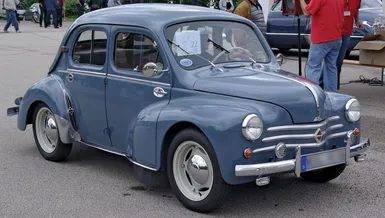
World War II brought devastation. German forces seized the factories. Allied bombings left many facilities in ruins. When Paris was liberated in 1944, the surviving plants were confiscated by the French state. In 1945, the government established the Régie Nationale des Usines Renault. The mission was clear: rebuild France with popular, inexpensive family cars. The Renault 4CV, produced in the mid-1950s, became the symbol of this era.
American ambitions and painful exits
Renault didn’t limit its ambitions to Europe. In 1974, it acquired Automobiles M. Berliet, the heavy-truck subsidiary of Citroën. This move signaled a push into industrial vehicles.
The 1970s also saw a bold attempt to crack the American market. In 1979, Renault signed an agreement with American Motors Corporation (AMC). The deal allowed AMC dealers to sell Renault cars in the United States. In return, Renault marketed AMC vehicles in Europe. By 1980, Renault had become the principal stockholder in AMC.
It was a risky pivot. The American market is notoriously difficult for foreign automakers. The cultural fit wasn’t there. The brands didn’t resonate. In 1987, Renault announced its withdrawal from the U.S. automobile market. It struck a buyout agreement with Chrysler Corporation to exit cleanly.
The company did, however, maintain a presence in heavy transport. From 1983, Renault held a controlling interest in Mack Trucks Inc., the American heavy-truck manufacturer. This division remained a steady revenue stream even as passenger car ventures fluctuated.
State control remains
Despite decades of privatization efforts across Europe, Renault’s relationship with the French state has remained tight. The government never fully let go. In 1994, a semiprivatization occurred. The state sold off shares but retained a 50.1-percent stake.
This majority ownership gives Paris significant influence over corporate strategy. It protects the company from hostile takeovers. It also ties the automaker’s fate to national economic policy. For investors, this means Renault is never fully free to follow purely market-driven impulses. For consumers, it means a brand that is both global and deeply rooted in French industrial identity.
The history of Renault is a series of pivots. From