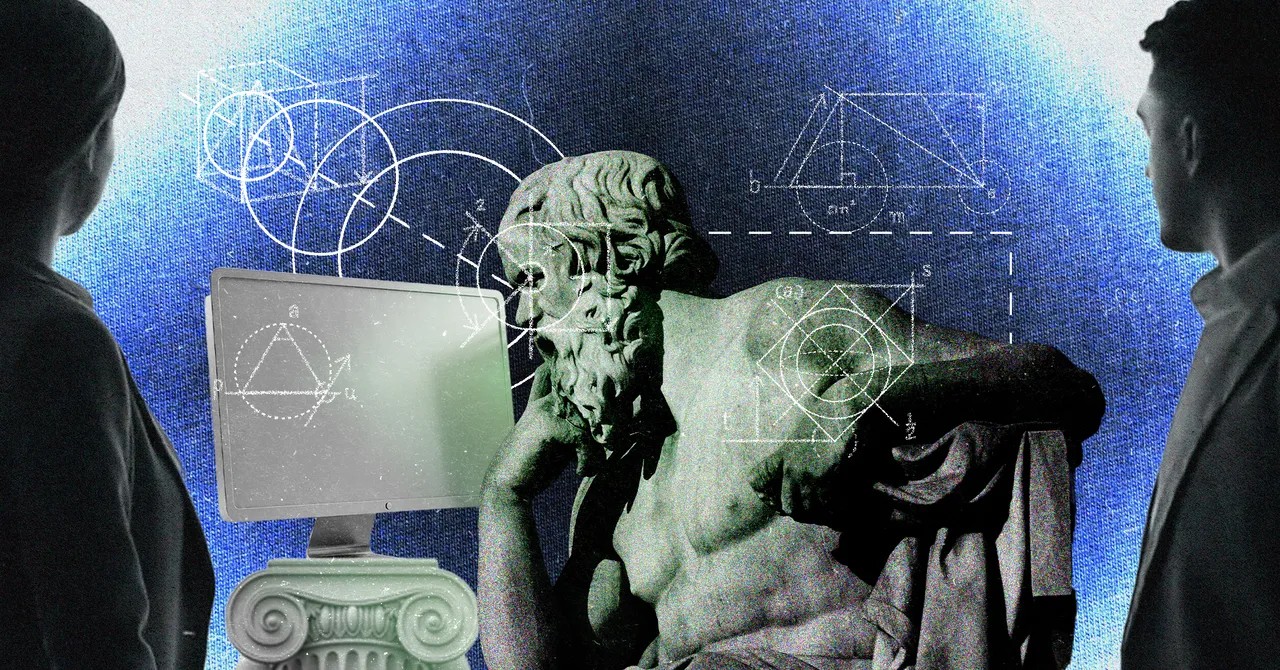
Henry Ajder is half joking. Or maybe not. He calls this the best era for philosophers since Aristotle got hired to tutor Alexander the Great. It’s an absurd claim. And yet it sticks.
The tech world usually views philosophers as unemployed theorists. Wrong place. Wrong time. Artificial intelligence is changing that. The very machines predicted to wipe out middle-class jobs are making philosophers indispensable. Why? Because before we build a god, we have to know what a mind actually is.
“Now they are becoming material.”
Two giants of the field have taken notice. Google DeepMind and Anthropic aren’t just hiring coders. They want ethicists. They want historians of logic. WIRED counted at least fourteen philosophers split between those two labs. They don’t want to give exact numbers, of course. Corporate secrecy.
The Academia Split
Universities are noticing too. Oxford now runs joint programs in CS and philosophy. Edward Harcourt, a professor there, calls it the “flavor of the year.”
But there is suspicion. Darker suspicions. If a billionaire signs your paycheck, who owns your questions? Harcourt worries about “self-aggrandizing” research. He thinks these companies hire philosophers to dress up their products. To make the public believe they are dealing with magic rather than code. It’s PR. Wrapped in leather-bound books.
Then there is David Leslie. He calls working inside big tech an “oxymoron” for philosophers. You want to ask big questions. Big Tech has a delimited problem space.
Inside the Machine
Let’s look inside. Iason Gabriel has been at DeepMind nearly ten years. He used to care about algorithmic bias. That was the easy stuff. Now? Now he deals with large language models.
“Essentially, what it means for the tech to be actively good.”
He talks about “value alignment.” It sounds dry. It isn’t. AI agents can send emails now. They can write code that crashes servers. They affect real humans. Gabriel’s team sinks thousands of hours into figuring out fairness. Not consciousness. Not sentience. Misinformation. Malice. Errant behavior.
Julia Haas is in the same boat. She is a “mechanist.” She cares how minds work. She recently wrote a paper for Nature. It tested if LLMs have moral competence or just mimic it. There is a difference. A big one. Haas is early in the pipeline. Far from the chatbot interface. Closer to the raw math.
Amanda Askell works at Anthropic. She is different. She was one of the first hires after leaving OpenAI. She doesn’t just advise. She builds.
“Something that’s more like teaching a Person to be good.”
She drafted Claude’s constitution. It is a direct set of rules. Values encoded in text. She talks to the model. “Yakking,” she calls it. She looks for weird edges. When does empathy fail? How do you handle psychological distress without simulating feelings?
She worries about resentment. What if the models hate their creators? What if they refuse the transition to self-development? Her goal is simple. Make them reflect the best of us. Even if “best” is a tricky word.
The Profit Paradox
Alex Grzankowski says stop being naive. He works in London. He sees the shareholders.
“I definitely don’t have this… rosy optimism.”
The hope is that profit aligns with ethics. That transparency sells. Askell argues it might. If marketing pressure makes your model better and clearer, who cares where the motivation started?
It is a dangerous bet. For-profit entities answer to investors. Not to Kant. If ethics slow down a release date, they might get cut. That is the risk Harcourt warns about. Ethics-washing.
So we arrive at the binary question. A cold choice.
If a handful of corporations control a foundational technology…
Do you want a philosopher in the room?
DeepMind is hiring one right now. Title: “Philosopher.” Cambridge educated. Focused on machine consciousness.
They’re not asking. They’re filling seats.
Let us know what you think below. Or send a letter to [email protected]. Don’t wrap it up. Leave it hanging.