The word “physiocrat” isn’t one you hear in boardrooms. It comes from the Greek for “rule of nature.” In the 1700s, a group of thinkers in France coined it to describe a radical idea: let the economy alone. They believed government interference was not just annoying but fundamentally wrong.
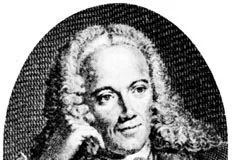
François Quesnay led the charge. He is widely considered the father of scientific economics. Before him, economic thought was a mess of moralizing and guesswork. Quesnay changed that. He looked at the economy as a system. Specifically, he compared a workshop to a farm. His conclusion shocked the mercantilist establishment.
“The farm alone added to a nation’s wealth.”
Most people in the 18th century thought wealth came from trade or manufacturing. The Physiocrats disagreed. They argued that only agriculture produced a “net product.” A factory worker takes raw materials and shapes them. The value of the materials is preserved, but not necessarily increased. A farmer plants seeds. The harvest is worth more than the seeds. That surplus is the only true economic growth.
This made land the holy grail of wealth. If you wanted a rich nation, you needed fertile soil, not busy factories.
The school attacked mercantilism with surgical precision. Mercantilists believed a country grew rich by exporting more than it imported and hoarding gold. They supported strict regulations, tariffs, and state-controlled industries. The Physiocrats saw this as a trap. They argued for laissez-faire long before Adam Smith popularized the term. They wanted written law to align with natural law. Chaos, they believed, was better than clumsy government meddling.
Key disciples included Victor Riqueti, Count de Mirabeau, and Pierre Samuel du Pont de Nemours. These weren’t just academics. They were courtiers and intellectuals who tried to push these ideas into policy. Their influence peaked in the 1760s.
Then it collapsed.
By 1768, the movement was already fracturing. The real blow came in 1776. The French comptroller general, who had been sympathetic to Physiocratic ideas, was dismissed. The political wind changed overnight. Leading Physiocrats were exiled. Their theories on wealth were largely dismantled by subsequent economists. The idea that only farmers created value didn’t survive the industrial revolution.
But their method did.
Quesnay and his followers introduced a systematic, analytical approach to economics. They treated it as a science. This shift had a permanent effect on the discipline. We still use their framework for thinking about input-output relationships, even if we no longer believe agriculture is the only source of value.
The Physiocrats were wrong about the farm. They were right about the science.