Monopoly and competition aren’t just academic buzzwords. They are the invisible gears turning beneath every transaction you make. In economics, these terms define the messy, complex relationships between firms. A monopoly is simple in theory: one supplier holds exclusive rights to a product with no substitutes. They set the price. You pay it. They aren’t worried about rivals.
Competition is the opposite. It is a battlefield.
The structure of the market depends on how companies produce and distribute goods. These structures determine who holds the power. If you want to understand why some prices stay high while others crash, you have to look at three factors. Concentration. Differentiation. Entry barriers.
The Number of Players
Seller concentration measures how many vendors exist in an industry and their slice of the pie.
When there are hundreds of sellers, each with a microscopic market share, we call it atomistic competition. If one seller changes their price or output, nobody notices. The market doesn’t care.
More often, you see oligopoly. Here, the number of sellers is small. Each holds a significant share. If one lowers prices, rivals react immediately. They might match the price or launch a counter-campaign. It is a delicate dance of interdependence. Even if an industry has some small players mixed in, as long as a few giants dominate, oligopoly rules.
Then there is the single-firm monopoly. One seller controls the entire output. They determine price and quantity without fearing rival response. The power is absolute.
Why Products Aren’t Identical
Market structure is also shaped by buyer preference. In some industries, products are commodities. Basic farm crops are identical. A bushel of corn is a bushel of corn.
In others, products are differentiated. Buyers prefer Brand X over Brand Y. This preference is subjective. It has little to do with tangible quality. It is about advertising. Brand names. Distinctive design.
The strength of this preference ranges from slight to intense. It tends to be highest among infrequently purchased consumer goods. Prestige items. Gifts. When differentiation is strong, sellers gain pricing power. They can charge more because buyers believe the product is unique.
The Wall Around the Industry
Industries vary wildly in how easy it is for new sellers to enter. Barriers to entry are the advantages enjoyed by established players over potential newcomers.
These barriers can be structural. Costs for incumbents might be lower due to economies of scale. New entrants would have to operate at a higher cost base just to break even. Alternatively, established sellers might command higher prices because buyers are loyal.
Barriers also exist when an industry requires massive market share to be profitable. A new company might enter, but if they can only capture 1% of the market, they burn cash. They fail.
Economists categorize entry difficulty into three rough degrees.
Blockaded entry allows established sellers to set monopolistic prices without attracting any new competition. The wall is too high.
Impeded entry allows prices to rise above minimal average costs. Not to monopoly levels, but high enough to generate excess profit. Some new sellers might try, but many will be discouraged.
Easy entry means sellers cannot raise prices above minimal average costs. If they do, new competitors flood in, driving prices back down.
Conduct vs. Performance
It helps to separate market conduct from market performance.
Conduct is what firms do. It includes pricing policies. Coordination strategies. How they make decisions compatible with their rivals.
Performance is the result. It is the end state. The relationship between selling price and cost. The volume of output. The efficiency of production. Technological progress.
The debate over monopolies centers on efficiency. Proponents argue that large-scale integrated operations reduce costs. They claim monopolies eliminate wasteful competition. They rationalize activities. They remove excess capacity. Certainty allows for long-term planning and rational investment.
The counter-argument is stark. Monopoly power exploits consumers. Production is restricted. Variety is limited. Prices are inflated to extract excess profits.
Without competition, the incentive for efficient operations vanishes. Factors of production are not used in the most economical manner. The market fails to allocate resources optimally.
Who wins in this scenario? The consumer usually loses. The monopolist gains. The efficiency argument is compelling until you see the price tag.
In the next section, we will look at how these structures play out in real-world industries. Not all monopolies are created equal. Some are protected by law. Others by sheer scale. The distinction matters.
The Invisible Hand and Price Taking
Perfect competition sets the baseline for how atomistic markets behave. It is the theoretical benchmark against which other industrial structures are measured. Alongside monopolistic competition, it belongs to the category of atomistic industries.
In a perfectly competitive market, many small sellers offer an identical product. There is no differentiation. Buyers and sellers interact in a common arena where no single participant holds sway over the price. You cannot influence the market price. You must accept it.
The price is impersonal. It emerges from the collision of total supply and total demand across all participants. Because there are so many sellers, collusion is impossible. A common agreement on price or output is structurally precluded. Each firm acts independently.
Adjusting Output to Market Signals
Each seller looks at the current market price. They assume this price will not change due to their individual actions. Then they adjust their output. The goal is simple: maximize aggregate profit.
This creates a paradox. While one seller’s output change is negligible, the collective effect of every seller doing the same thing is massive. Total supply shifts significantly. Consequently, the market price moves. It falls if supply outstrips demand. It rises if supply is scarce.
The process continues. Sellers keep adjusting. Prices keep fluctuating. Until equilibrium is reached.
Reaching Equilibrium
Equilibrium occurs when the total output sellers want to produce matches the total output buyers want to purchase. At this point, the market clears. The price stabilizes provisionally.
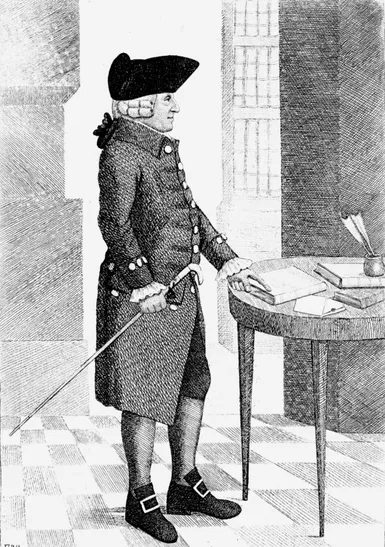
Adam Smith described this mechanism centuries ago. He referred to it as the “invisible hand” of the market. It is not a hand at all. It is the emergent result of independent, profit-driven decisions. The market conducts itself.
“The invisible hand” guides prices to a provisional equilibrium without central coordination.
This model assumes rational behavior. It assumes perfect information. In reality, friction exists. But as a standard for measuring market conduct, it remains the primary reference point for understanding price-taking industries.
When the price settles high enough to let established players pocket profits that outpace a standard interest return, new sellers flock in. Supply swells. The price eventually crashes down to the minimal average cost of production, which includes a fair return on investment. Flip the script. If prices are too low and sellers bleed money, they quit. Supply shrinks. The price climbs back up to that same long-run equilibrium point.
This is the mechanics of pure competition. The result? Industry output hits a feasible maximum. Prices hit a feasible minimum. All production happens at the lowest possible average cost because competition forces it there. No one gets excess profits to skew income distribution.
The Flaw in the Perfect Ideal
Economists often clap for this setup as the gold standard for welfare. It shouldn’t be an unqualified celebration. Perfect competition is only ideal if most industries operate this way. It also requires that labor and capital move freely between sectors. If those conditions fail, resources aren’t allocated to maximize consumer satisfaction.
There’s a darker side, too. Will firms in purely competitive markets earn enough to reinvest in better equipment? Probably not. Innovation gets stifled. The margin is too thin.
Then there’s “destructive competition.” Look at coal, steel, agriculture, or early automotive markets. History shows these sectors accumulating massive excess capacity. Sellers suffer chronic losses. The market doesn’t self-correct fast enough for society’s tolerance. People don’t exit the industry. The invisible hand moves too slowly. Government eventually steps in, restricting supply or propping up prices to keep the lights on.
Even with these caveats, perfect competition remains the baseline metric. You use it to judge how other market structures perform.
The Reality of Monopolistic Competition
Real life is messier. Monopolistic competition blends atomistic structure with product differentiation. The tendencies still mirror perfect competition, but the nuances matter.
Because your product is slightly different from the rest, you can nudge your price up or down. Not by much. You’re still tethered to the broader market forces. You can’t dictate terms.
Rivalry here isn’t just about price. It’s about sales promotion. It’s about tweaking products to appeal to specific buyers. Everyone plays this game. Nobody really wins on average. Long-run equilibrium prices end up higher because they reflect these added marketing and differentiation costs.
Buyers pay more. They get more variety. Some sellers win big by capturing market share. They pocket profits above the basic interest return. Others lose. It’s a high-variance game. And like perfect competition, monopolistic competition can suffer from destructive competition. Too many firms enter despite the risk of loss. Excess capacity piles up. The market gets clogged.
The Monopoly Control
Single-firm monopolies are rare outside of regulated utilities. But studying them sets the pole opposite perfect competition.
A monopolist is the sole supplier. They can set any price, provided they accept the volume of sales that price generates. Demand usually drops as price rises. The monopolist’s goal is clear: set the price that maximizes profit given the cost-to-output relationship.
By restricting output, the monopolist drives the price up. This option doesn’t exist in atomistic industries.
The monopolist charges well above production costs. Profits soar past normal returns. Output is lower. Prices are higher than in a competitive market. Whether they produce at minimal average cost depends on their internal efficiency. There’s no external pressure to force efficiency. If they’re wasteful, they stay wasteful.
If entry is completely blocked, the monopolist sets the price to maximize industry profit. If entry is just hard—not impossible—they might set a price low enough to scare off potential rivals, but still above competitive levels. As long as it maximizes long-run profit, the strategy holds.
The Oligopoly Balance
Oligopolies are hybrids. They combine monopolistic power with competitive pressure. The outcome depends on the specific structure. How many firms are there? How similar are the products? How easily can they coordinate? The tension between colluding to raise prices and undercutting rivals to steal share defines the market performance.
In an oligopoly, the game changes when there are only a few sellers. Each one holds enough market share that a small move by one player ripples through the whole industry. You cannot adjust your policy in isolation. If you change your price, your rivals notice. They react. This creates a cycle of conjecture and response that defines the market.
Consider a price cut. Seller A drops their rate significantly below the industry average. The goal is simple: steal customers. If rivals hold their prices steady, Seller A wins volume. But in an oligopoly, rivals rarely sit still. They might match the cut. No one gains market share. Everyone makes less profit. Or, they might overreact, cutting prices even deeper to punish Seller A. Now Seller A faces a price war they didn’t want.
The reverse happens with price hikes. If Seller A raises prices, they risk losing customers to competitors who keep rates low. Seller A will likely revert to the previous level. But if rivals see an opportunity, they might raise their prices too. The entire industry’s price floor moves up. Combined profits increase for the group.
This interdependence means no seller acts blindly. They guess how others will respond. The result is rarely a price that equals the minimal average cost seen in perfect competition. Nor is it always the highest possible monopoly price. Instead, you get a range of “equilibrium” levels. The exact point depends on the specific dynamics of the firms involved.
The Fragility of Collusion
Because firms are so interdependent, collusion becomes a viable strategy. This doesn’t always require a signed contract. It can be tacit. A pattern of reactions develops over time. If one firm raises prices, others follow. It becomes customary.
In the United States, explicit cartels are illegal. The law forbids express collusive agreements. But tacit understandings—gentlemen’s agreements—are common. These implicit deals are fragile. They can collapse if demand falls. They can break if technology improves, allowing one firm to cut costs while maintaining profits, breaking the unified front.
In other Western countries, the rules differ. Formal collusive agreements, known as cartels, are often legal if they are comprehensive. Whether legal or illegal, explicit or tacit, oligopolistic prices are “administered.” They are set by sellers managing their competitive relationships, not by the impersonal forces of supply and demand in a vacuum.
The Conflict of Aims
Market performance in oligopolies varies because firms have two conflicting goals.
- Collective Profit Maximization: They want to set prices high enough to maximize the total profit pie. This requires cooperation and stable, high prices.
- Individual Profit Maximization: Each firm wants to grab the largest slice of that pie, often at the expense of rivals.
The balance between these aims depends on concentration. When there are only two or three major players, their actions have massive impact. The deterrent to cheating is strong. If you undercut your partner, they will retaliate aggressively. In highly concentrated markets with blocked entry, this tension often resolves in favor of monopoly-level pricing.
When entry is only impeded, not blocked, prices stay lower to discourage new competitors. But look closer at the actual transactions. The announced price might be high. The actual transaction price, however, might be lower due to secret discounts for specific buyers. This clandestine undercutting brings average prices down.
The Competitive Fringe
Not all oligopolies are monolithic. Often, you have a “core” of large, interdependent firms surrounded by a “competitive fringe” of small sellers. These small players do not have the power to set prices, but they have enough volume to matter. Their presence forces the large firms to limit how high they can push prices. If the core firms get too greedy, the fringe steals market share.
Economists who argue that oligopolistic prices are indistinguishable from competitive prices are in the minority. Statistical evidence generally shows prices and profits remain above competitive levels, though not always at the full monopoly extreme.
Non-Price Competition
Where products are differentiated, the rivalry shifts from price to promotion and development. Large interdependent sellers might restrict these costs to monopoly levels if they collude. But if rivalry is fierce, sales-promotion costs and R&D spending can skyrocket.
It is common for oligopolists to agree on high uniform prices while engaging in intense non-price competition. They keep the sticker price steady but spend heavily on advertising, features, and service to differentiate themselves. This dynamic is especially pronounced when seller concentration is lower, allowing more room for independent maneuvering.
Workable Competition
The concept of “workable competition” acknowledges that perfect competition is an ideal, not a reality. In oligopolies, some degree of market power is inevitable. The question isn’t whether firms have power, but whether that power leads to efficient outcomes. If the interdependence leads to stable prices, reasonable innovation, and no excessive profits, the market may be considered “workable” even without perfect competition. The boundaries between oligopoly and monopoly, or competition and collusion, are often blurred by the strategic behavior of sellers.
Most industries don’t play by the same rules. Market structures shift the goalposts on performance. Economists needed a way to judge whether an industry was actually working for society, not just for shareholders. They coined the term workable competition for this purpose. It’s not about achieving some theoretical ideal. It’s about getting reasonably close to it given the real-world constraints of a specific sector.
The definition is slippery. By nature, it’s subjective. You can’t put a hard number on “reasonable.” But we can identify the fingerprints of a market that is performing well.
The Five Pillars of Workable Performance
If an industry is working, it looks a certain way over the long haul. The criteria are pragmatic.
First, price matters. Selling prices should hover around average production costs. Not above. If profits are significantly higher than a normal return on investment, the market is likely failing consumers. Prices must also react to cost reductions. If input costs drop, the consumer should see it.
Second, efficiency scales. The bulk of industry output should come from facilities operating at their most efficient capacity. Or at least, facilities with comparable technical efficiency. If your main competitors are running bloated, inefficient plants, the whole sector is dragging.
Third, no chronic waste. An industry shouldn’t have significant plant capacity sitting idle even during economic booms. That’s excess capacity. It’s a signal that resources are misallocated or competition is stifled.
Fourth, smart spending. Sales-promotion costs shouldn’t balloon beyond what’s necessary to inform buyers. If you’re spending fortunes just to keep customers aware of availability and prices, something is off.
Fifth, innovation. The industry must be progressive. It needs to introduce better, cheaper production techniques and improved products. The gains from progress must outweigh the costs.
Where Market Structures Fail
Applying these criteria to different market structures reveals predictable patterns. The data is stark.
Unregulated monopolies are almost always unworkable. They restrict output. They set prices well above cost. They pocket excess profits. The resource allocation becomes inefficient, and income distribution skews heavily toward the owner.
Oligopolies are more complex. Their performance depends on two variables: seller concentration and barriers to entry.
High concentration plus high barriers to entry mimics monopoly behavior. Performance is poor. Prices are high. Yet, oddly, these markets rarely suffer from technical inefficiency or excess capacity. The few players are usually highly optimized.
Moderate concentration with moderate entry barriers? Better. Performance improves in both price-cost relations and technical efficiency. But they can suffer from recurring excess capacity. Why? Because periodic waves of new entrants overbuild the market before settling in.
Atomistic industries—those with many small players—tend toward workable performance. Unless they fall into destructive competition, the fragmentation keeps prices in check and innovation alive.
The Hidden Cost of Differentiation
There’s a twist in industries where products are differentiated. This is common in oligopolies.
When brands look different, they spend more. Not just to inform, but to persuade. Resources flow into advertising campaigns that don’t increase utility. They flow into “idle variations” of product design—slight tweaks that don’t really improve the core function.
From the standpoint of workable competition, this is waste. It’s a drag on material welfare.
A purely rational society would favor industries with moderate-to-low seller concentration and low barriers to entry. Crucially, it would discourage extreme product differentiation. The goal is efficiency, not variety for variety’s sake.
The old argument that these industries need legal protection from “destructive competition” doesn’t hold up. The evidence is clear. Price wars and aggressive market warfare are extremely rare in industrialized nations. The market self-corrects more often than regulators believe.
The real danger isn’t chaos. It’s the quiet inefficiency of high prices, idle capacity, and persuasive spending. That’s where the money leaks out of the system. And it rarely shows up in a quarterly report.
Most people think they understand how markets work. They see prices, they buy things, they assume competition keeps things fair. That assumption is often wrong. The reality is far more complex, hidden in the gaps between perfect competition and pure monopoly. To see through the fog, you need to look at the foundational texts that defined the field. These aren’t just dusty academic relics. They are the blueprints for how we understand business power today.
The Oligopoly Problem
The starting point is realizing that most industries don’t look like the models in intro econ classes. They look like battles. William Fellner’s Competition Among the Few (1949, reissued 1965) tackles this head-on. It’s a sophisticated development of oligopoly theory. Why does it matter? Because oligopoly is where most corporate action happens. A few giants stare each other down. Pricing isn’t a simple equation. It’s a psychological game. Fellner shows the mechanics of that tension. It’s stimulating. It’s also terrifyingly accurate.
Then there is the concept of barriers to entry. You hear this term used loosely. Joe S. Bain gave it teeth. His 1956 book, Barriers to New Competition, remains the thorough introduction to the subject. He dissects what keeps new players out. Capital requirements? Brand loyalty? Control of resources? Bain maps the consequences. If you want to know why some markets feel stagnant, read Bain. He also wrote Industrial Organization (1968, reissued 1987). This is a general textbook, but it’s dense. It covers both the theory and the empirical reality of monopoly and competition. It forces you to confront the messy data.
The Legal and Economic Lens
Theory is one thing. Enforcement is another. Carl Kaysen and Donald F. Turner wrote Antitrust Policy: An Economic and Legal Analysis (1959, reissued 1965). This is a superior analysis of American antitrust policies. It’s not just a legal guide. It’s a critique. It examines how the law actually works in practice versus how it’s supposed to work. The gap between the two is where the real story lies.
On the theory side, you have the classics. Edward Chamberlin’s Theory of Monopolistic Competition (8th ed., 1962) is a germinal contribution. It changed how we view differentiated products. You don’t just buy “a car.” You buy a specific brand with specific features. That slight monopoly power changes everything. Joan Robinson’s Economics of Imperfect Competition (2nd ed., 1969) is equally penetrating. She analyzes quasi-monopolistic pricing. She shows how prices are set when you have some control over the market. It’s not supply and demand in a vacuum. It’s strategy.
Policy and Broader Systems
What about the government’s role? William G. Shepherd and Clair Wilcox’s Public Policies Toward Business (8th ed., 1991) is a good general textbook. It includes extensive treatment of policies affecting monopoly and competition. It’s practical. It’s not just abstract math. It’s about rules and consequences.
But the market doesn’t exist in a bubble. Joseph A. Schumpeter’s Capitalism, Socialism, and Democracy (6th ed., 1987) provides an enduringly brilliant analysis. Schumpeter argues that innovation destroys the old equilibrium. Creative destruction. It’s a brutal process. It’s also necessary. Charles E. Lindblom’s Politics and Markets (1977) takes a wider view. He examines political economic systems. He compares different ways societies organize production. It’s a classic for a reason. It forces you to think about politics as part of the market structure.
Specialized and Advanced Frameworks
Sometimes you need to zoom in