


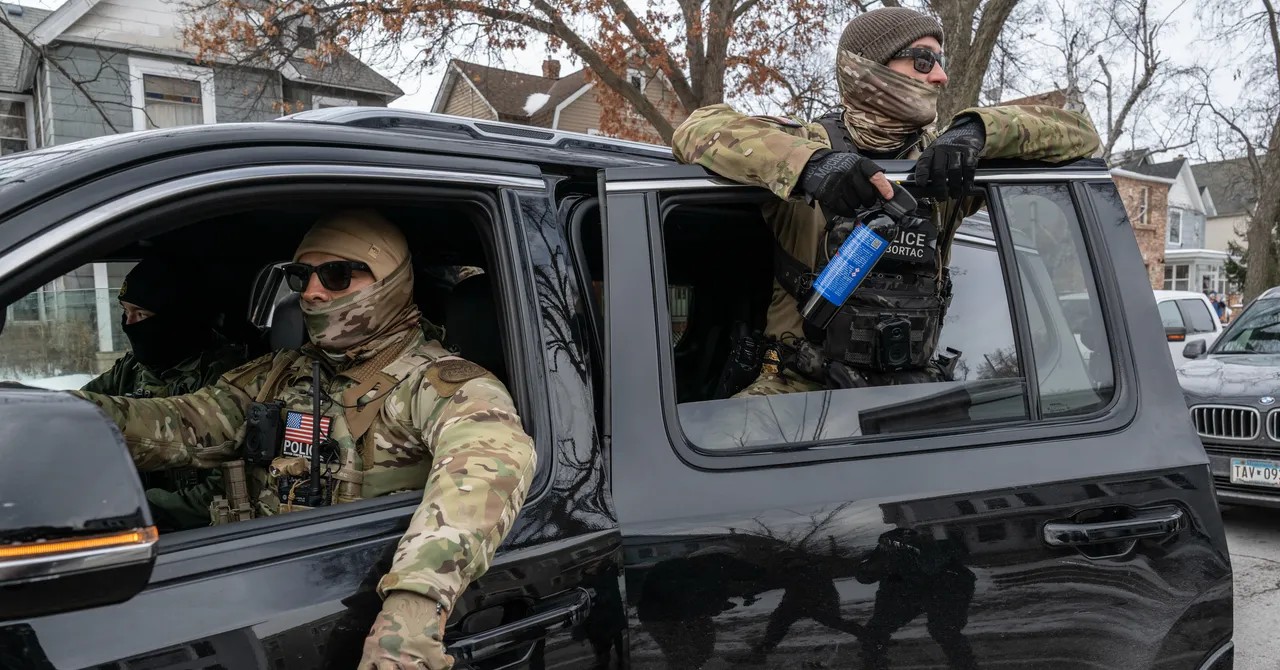
More than two dozen Immigration and Customs Enforcement (ICE) vehicles operating in Minnesota, North Dakota, and South Dakota were deployed without required emergency lights and sirens, according to a recently disclosed federal contract. The agency rushed to spend $47,330.49 on 31 “ATLAS1” kits from Whelen Engineering to retroactively equip these vehicles, raising questions about operational legality and public safety.
Urgent Retrofitting Amid Heightened Enforcement
The contract justification states that the vehicles were put into service before being fully equipped, meaning they were non-compliant with law enforcement standards. ICE argued that waiting for “permanent retrofitting” would undermine the agency’s current “surge operation” led by Homeland Security Investigations (HSI). This operation is occurring in a region where tensions are already high following a fatal shooting involving an ICE officer, and the state of Minnesota has filed a lawsuit to halt federal immigration enforcement.
Legal Gray Area and Officer Safety Concerns
HSI’s own 2012 handbook explicitly states that vehicles without lights and sirens cannot legally be used in emergency driving – including pursuits or rapid responses. The handbook mandates officers halt operations if their vehicle lacks the proper equipment, deferring to agencies with compliant vehicles. However, the document allows exceptions only for surveillance or when responding to immediate life-threatening situations.
This creates a dangerous contradiction: ICE deployed vehicles that violated its own safety protocols and potentially state laws (Minnesota requires audible sirens and at least one red front light). The agency did not respond to requests for comment on how it justified operating non-compliant vehicles.
Portable Kits and Covert Operations
Whelen’s “ATLAS” kit is designed for “quick installation” on any vehicle, making it ideal for rapid deployment. The kit includes lights, sirens, and a portable control system in a suitcase-like case. The purchase highlights a reliance on temporary fixes rather than proper vehicle maintenance.
Recent court testimony further complicates the situation. ICE officer Jonathan Ross described using an “unmarked” vehicle with lights hidden on the grill, visor, and windows during an attempted arrest. Another agent, working with the FBI, drove a bureau-owned Nissan Rogue with flashing lights. These details suggest a pattern of operating in legally ambiguous conditions, potentially to maintain operational surprise.
Escalated Enforcement Amid Legal Battles
The timing of this procurement is critical: it comes after a fatal ICE shooting sparked protests and a legal challenge from Minnesota officials. The Department of Homeland Security has doubled down on enforcement, adding hundreds of officers to the 2,000 already in the region. The lack of compliant vehicles, combined with aggressive enforcement tactics, raises serious questions about ICE’s commitment to public safety and legal compliance.
The situation reveals a systemic problem: ICE prioritized rapid deployment over basic operational standards, potentially endangering officers and civilians alike. The agency’s reliance on makeshift fixes underscores the pressure to escalate enforcement, even at the cost of following established protocols.


