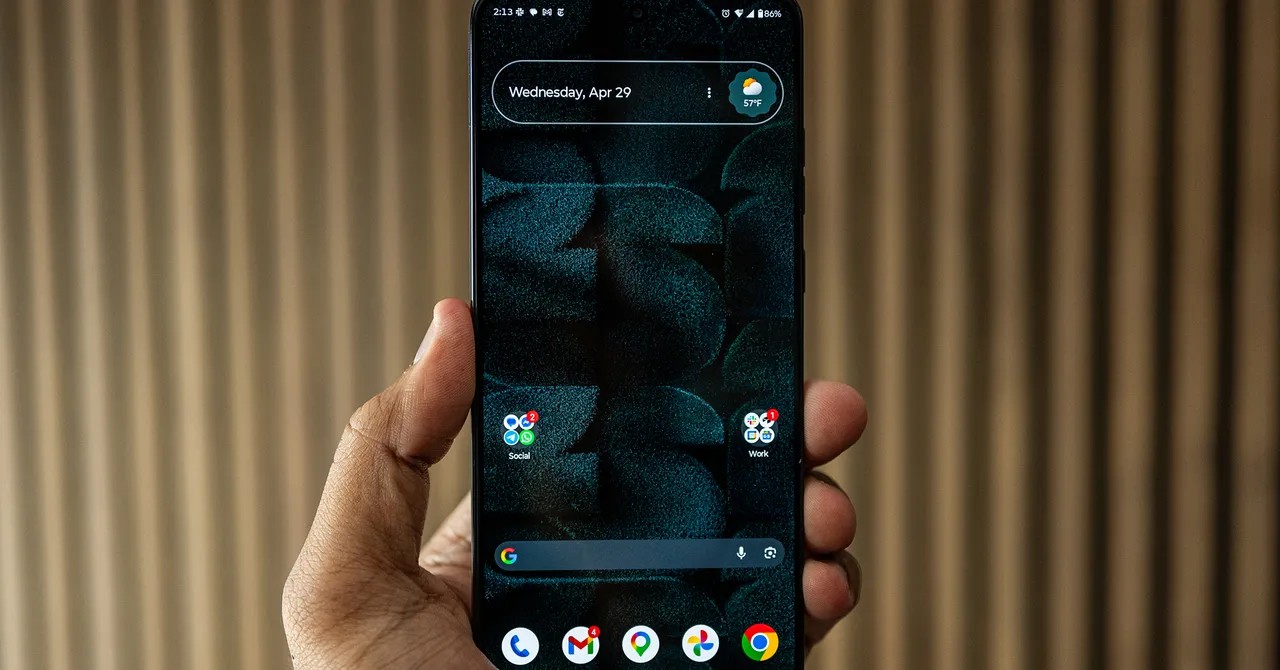
In a smartphone market defined by premium pricing and disappearing ports, the Motorola Moto G Stylus 2026 occupies a unique, almost solitary niche. It is currently the only device in the US market that combines three specific legacy features: a built-in stylus, a microSD card slot, and a 3.5mm headphone jack.
However, this exclusivity comes at a steep cost. Due to global memory chip shortages, Motorola has raised the price by $100, pushing the device from budget territory into the midrange segment at $500. At this price point, it competes directly with the Google Pixel 10a, Nothing Phone (4a) Pro, and Samsung Galaxy A57. While these rivals offer superior cameras, faster processors, and longer software support, the Moto G Stylus 2026 remains the only choice for users who refuse to compromise on physical connectivity and analog input tools.
The Shift to an Active Stylus
The most significant hardware change in this generation is the transition from a passive capacitive stylus to an active digital pen. This upgrade supports pressure sensitivity and tilt detection, bringing the writing experience closer to that of a tablet or Samsung’s Galaxy S26 Ultra.
Key improvements include:
* Automatic Charging: The stylus docks into the phone’s chassis, charging automatically when not in use.
* Durability: Both the phone and the stylus carry IP68/69 water and dust resistance ratings.
* Customizable Button: A single press opens the annotation toolbar, while a long-press triggers Google’s Circle to Search.
Note on Usability: While the Circle to Search integration is innovative, the implementation feels clunky. Users must hold the button while circling an object on the screen, requiring a second action to confirm the search. It is a functional feature, but not as seamless as native gestures.
Despite the learning curve, the active stylus performs well for note-taking and sketching. The included Notes app successfully converts handwritten text to digital characters, though accuracy depends heavily on the user’s penmanship. For dedicated stylus users, this is a meaningful upgrade over the previous passive model.
Performance and Battery: Steady, But Not Fast
Under the hood, the Moto G Stylus 2026 retains the Qualcomm Snapdragon 6 Gen 3 processor and 8 GB of RAM from the 2025 model. Benchmark scores are marginally lower than its predecessor, suggesting that performance gains are negligible.
- Daily Use: The phone handles everyday tasks smoothly, with minor lag only visible when launching the camera app.
- Gaming: Graphics-intensive games will expose the chipset’s limits, a disadvantage compared to competitors with higher-end processors.
- Storage: In a surprising move, base storage has been reduced from 256 GB to 128 GB. However, the inclusion of a microSD slot (supporting up to 1 TB) mitigates this limitation for users who prefer expandable storage.
Battery life remains a strong suit. The 5,200 mAh battery easily lasts two days with light to average use. Even with heavy screen-on time (around 9 hours), the phone typically holds out until early evening. A welcome addition is wireless charging, providing a second method to power up the device alongside the wired connection.
Display and Design
The device features a 6.7-inch, 120-Hz AMOLED display with high brightness levels suitable for outdoor use. However, the auto-brightness algorithm is overly sensitive, frequently dimming the screen in moderate lighting conditions. Users may need to manually disable auto-brightness for a consistent experience.
Design-wise, the phone boasts a unique “twill-inspired” textured back, offering a premium feel that surpasses Samsung’s midrange offerings. However, it lacks the sleek metal construction of the Nothing Phone (4a) Pro or the minimalist aesthetic of the Google Pixel 10a.
Camera Limitations
At $500, the camera system is the Moto G Stylus 2026’s weakest link. The 50-megapixel main sensor struggles with motion and high-contrast lighting:
- Motion Blur: Slight movement, such as a pet shifting position, often results in blurry images.
- Dynamic Range: In high-contrast scenes, the camera fails to balance exposure, leading to crushed blacks (loss of detail in shadows) and muted colors.
- Ultrawide: The 13-megapixel ultrawide lens suffers from unnatural color casts, particularly in skies.
- Selfies: The front-facing camera performs adequately, even in backlit conditions.
Compared to the Pixel 10a’s computational photography prowess or the Galaxy A57’s versatile lens array, the Moto’s camera is strictly utilitarian.
Software Support and Value Proposition
The most critical concern for potential buyers is Motorola’s software update policy. The Moto G Stylus 2026 is guaranteed only two Android OS upgrades and three years of security updates.
This stands in stark contrast to competitors:
* Google Pixel 10a: Seven years of updates.
* Samsung Galaxy A57: Typically four to five years.
For a $500 device, this limited support window significantly reduces long-term value. However, Motorola’s history of frequent discounts means the phone often drops to $400 or lower during sales events. At that price point, the trade-off becomes more palatable.
Conclusion
The Motorola Moto G Stylus 2026 is not the best $500 smartphone in terms of raw performance, camera quality, or software longevity. However, it is the only smartphone that offers a built-in stylus, expandable storage, and a headphone jack. For users whose workflows depend on these specific features, it remains an indispensable tool, provided they can accept its camera limitations and limited update promise.