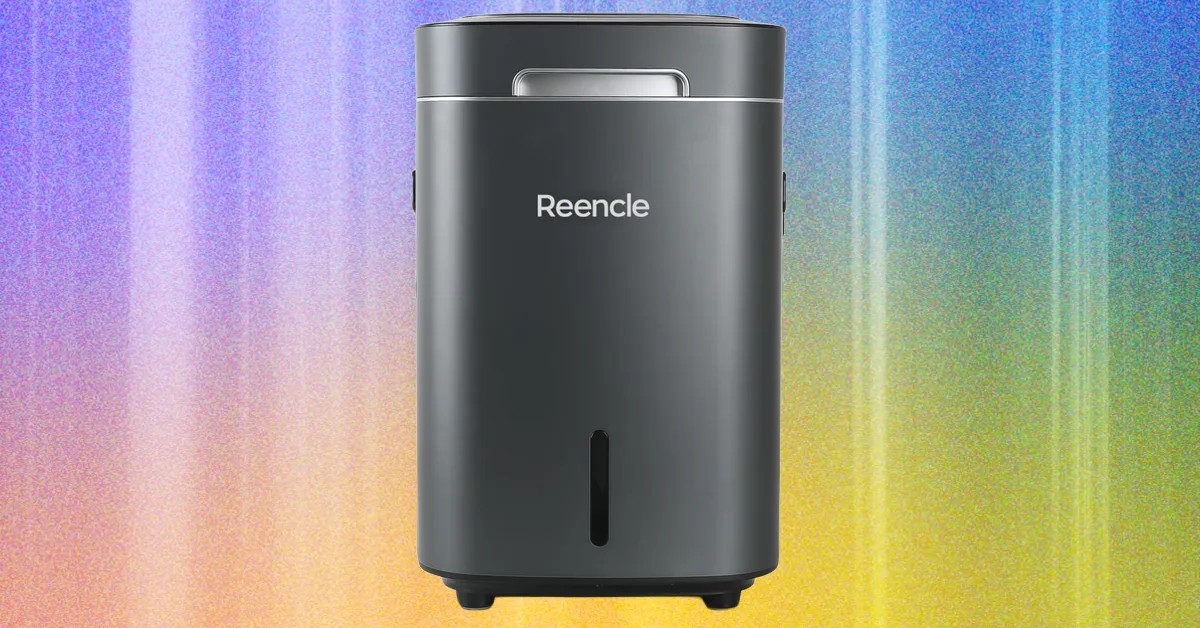
The promise of effortless kitchen composting is alluring: toss scraps into a sleek device and, magically, produce nutrient-rich soil for your garden. Unfortunately, the current reality of electric kitchen “composters” falls short of this vision. Most devices don’t create true compost; they grind and dry food waste, reducing volume and odor but not transforming it into a ready-to-use fertilizer. This matters because 24% of municipal solid waste is discarded food, contributing significantly to methane emissions in landfills.
While these machines won’t deliver garden-ready compost directly, they still offer value. They raise awareness of food waste, consume surprisingly little energy (around 1 kWh), and can reduce household waste volume. For those who lack composting space or facilities, they provide a practical alternative to landfill disposal.
Reencle Prime: The Closest to Real Composting
The Reencle Prime stands out as the most effective option, though it doesn’t fully deliver on the “compost” label. It operates like a heated trash can, breaking down scraps with a microbe-rich mixture. After hours or days, the output resembles sawdust and dirt—suitable for mixing with potting soil or feeding into a traditional compost pile.
The Prime accepts meat and dairy, unlike some competitors, and handles up to 2.2 pounds of waste daily. The larger Reencle Gravity model ($649) expands capacity to 3.3 pounds with quieter operation.
Dimensions: 14 x 15 x 22 inches
Capacity: 1.5–2.2 pounds
Processing Time: 2–24+ hours
Warranty: 1 year
Lomi 3: Efficient Grind-and-Dry Performance
The Lomi 3 excels at grinding and drying food scraps, though it’s essentially a high-tech waste reducer rather than a true composter. The newer model simplifies operation with a dedicated bucket and two modes: Grow and Express. Cycle times range from 3 to 16 hours, producing fine grounds suitable for compost piles or lawn application.
The Lomi 3 is easier to use than its predecessor, but some early units exhibited lid warping issues that caused odors. Despite this, it remains a popular choice for those prioritizing waste volume reduction.
Dimensions: 11 x 11 x 12 inches
Capacity: 3 liters
Processing Time: 3–16 hours
Warranty: 1 year (with extended options)
FoodCycler Eco 3: Straightforward Waste Recycling
FoodCycler Eco 3 doesn’t pretend to make compost—it’s a food waste recycler. This machine focuses on rapid waste reduction, processing scraps into a fine powder in 4–9 hours. Its auxiliary pail and simple operation make it convenient, but it emits noticeable groaning noises during operation.
The Eco 3 is ideal for those without composting access or facing waste disposal fines. The larger Eco 5 model offers increased capacity but requires more space.
Dimensions: 11 x 9 x 13 inches
Capacity: 3.5 liters
Processing Time: 4–9 hours
Warranty: 3 years
Vego: Fastest Breakdown, Lower Cost
For rapid waste breakdown, the Vego is the fastest, processing scraps in as little as two hours. It’s also the most affordable option, but at the expense of some convenience. The lid is difficult to secure, and the machine emits loud whirring noises during operation.
The Vego includes compost enhancer tablets for a potentially more biologically active output, though the overall effectiveness remains debatable.
Dimensions: 14.37 × 11.22 × 12.64 inches
Capacity: 4 liters
Processing Time: 2–24 hours
Warranty: 1 year
Mill: The Waste-Shipping Solution
The Mill stands out by offering a unique service: shipping processed grounds to a farm for repurposing as chicken feed. This addresses the issue of what to do with the output, but it also adds cost and logistical complexity.
The Mill’s output is coarse, and the device is expensive. However, for those who lack composting options and are willing to pay for waste disposal, it provides a novel solution.
Conclusion: Kitchen composters are not magical solutions. They reduce waste, but require realistic expectations. The Reencle Prime comes closest to producing usable material, while other models excel at grinding and drying. The best choice depends on your priorities: convenience, cost, or true compost production.