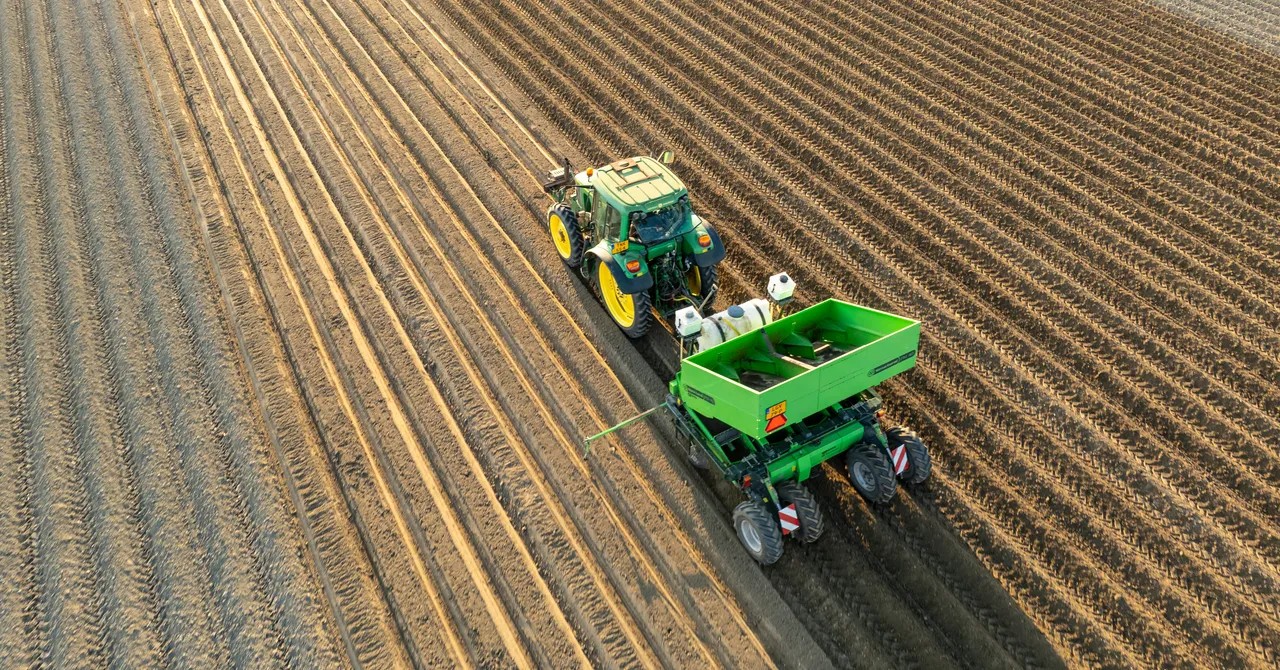
Agricultural giant John Deere has agreed to a $99 million settlement to resolve a class-action lawsuit alleging the company monopolized the repair market for its machinery. The lawsuit, brought by a group of farmers, accused the manufacturer of using software restrictions and service limitations to prevent owners from repairing their own equipment, forcing them instead to rely on authorized dealerships.
The Core of the Dispute: Ownership vs. Control
At the heart of this legal battle is a fundamental question regarding modern property rights: When you buy a machine, do you truly own it?
For years, farmers have complained that John Deere’s high-tech tractors are “locked” by software. Even if a farmer has the physical tools to fix a mechanical part, the machine’s digital brain often requires proprietary software access to function. This has led to:
– Delayed harvests: Farmers waiting days or weeks for an authorized technician to arrive.
– Lost profits: Critical windows for planting and harvesting are missed, costing millions in revenue.
– High costs: A lack of competition in the repair market allows dealerships to maintain high service fees.
This tension has fueled the global “Right-to-Repair” movement, which argues that consumers should have the legal and technical ability to fix any product they purchase.
Financial Impact and the “Fractional” Settlement
While $99 million is a significant sum, legal experts and advocates note that it represents only a fraction of the alleged damages.
“The farmers who get restitution will get some chunk of change, but that’s not the thing they care about,” says Nathan Proctor of US PIRG. “They’re looking for the ability to fix their equipment, because if they can’t fix it, they can lose everything.”
To put the scale of the dispute into perspective:
– Estimated damages: Repair advocates estimate total losses to farmers could be as high as $4.2 billion.
– The payout: The $99 million settlement will be distributed among an estimated 200,000 farmers who can prove they paid for dealership repairs since 2018.
– The “Psychological” Number: Analysts suggest the $99 million figure—rather than a round $100 million—was a calculated PR move to avoid the appearance of a nine-figure payout.
A Ten-Year Compromise
As part of the settlement, John Deere has committed to making repair tools and services more widely available for the next 10 years.
The company maintains that it is “aligned with farmers” and points to its Operations Center Pro Service as evidence that diagnostic tools are already accessible. However, skeptics remain wary. Critics note that the commitment is temporary; after the decade expires, the company could theoretically revert to its previous restrictive practices.
The Road Ahead
John Deere’s legal troubles are far from over. The company is currently facing a separate lawsuit from the U.S. Federal Trade Commission (FTC) regarding similar repair concerns.
The outcome of these ongoing battles will likely set a precedent for the entire tech and machinery industry, determining whether “ownership” in the digital age includes the right to tinker, repair, and maintain the tools of one’s trade.
Conclusion: While the $99 million settlement provides some financial relief to farmers, the true victory for the Right-to-Repair movement lies in whether John Deere actually delivers on its promise to open up its repair ecosystem.