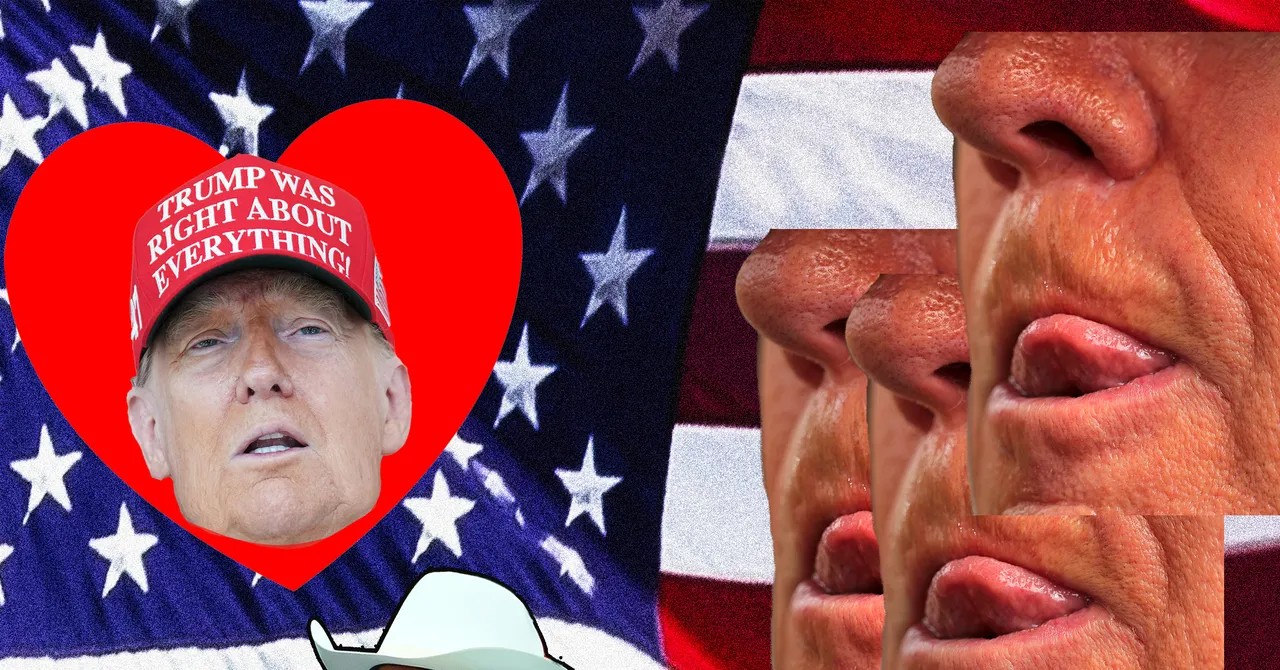
A White House staffer appears to have secretly run a highly influential pro-Trump X (formerly Twitter) account, blurring the line between official government messaging and organic online support. The account, known as Johnny MAGA, amassed nearly 300,000 followers by amplifying administration talking points while presenting itself as an independent voice within the MAGA media ecosystem.
The staffer, identified as Garrett Wade, a rapid response manager within the Trump administration, consistently boosted official White House content through the Johnny MAGA account. This includes pushing narratives that downplayed incidents like the killing of Renee Good by an ICE agent in Minneapolis, framing protesters instead of the shooting as the central issue. The account also amplified Trump’s Truth Social posts and attacked political opponents like California Governor Gavin Newsom.
The Undisclosed Connection
Evidence, including phone records and confirmation from a White House source, links Wade directly to Johnny MAGA. The account’s early activity, initially focused on NFTs, evolved into a consistent pro-Trump presence by 2022. Despite this, the operator never disclosed their official White House affiliation while operating the account. Multiple media outlets have previously cited Johnny MAGA posts as genuine expressions of public sentiment, unaware of the staffer’s involvement.
Financial Ties and Broader Trends
Wade’s connections extend to Opinion Architects, a digital consultancy owned by Taylor Budowich, a former White House communications official. This firm received over $325,000 from Make America Great Again Inc. for “research” and “communications” consulting. Budowich also led MAGA Inc., a super PAC that facilitated high-dollar access to Trump through exclusive events.
This case highlights a growing trend: the deliberate cultivation of online influencers by political campaigns to spread messaging discreetly. Trump’s 2024 campaign leaned heavily into this strategy, with Budowich co-founding “Send the Vote,” an initiative framed as nonpartisan but primarily reaching young, right-leaning voters.
Ethical Concerns and Transparency
Experts warn that undisclosed government involvement in online political discourse erodes public trust. “People have a right to know who is trying to manipulate public opinion,” says Samuel Woolley, a disinformation researcher at the University of Pittsburgh. “This lack of transparency is a breach of trust.”
The Democratic party has also faced scrutiny for similar practices, with dark money groups quietly recruiting progressive content creators for online messaging. However, the Johnny MAGA case stands out due to the direct involvement of a White House staffer operating under anonymity to amplify official narratives.
This practice raises serious questions about the integrity of political communication in the digital age. The ability to distinguish between genuine public sentiment and orchestrated influence campaigns is rapidly diminishing, leaving voters vulnerable to manipulation.
The incident underscores how political campaigns now operate in the shadows, weaponizing digital platforms to shape public perception through undisclosed means. Transparency in political messaging is critical, yet increasingly rare, as campaigns prioritize influence over ethical conduct.