The Artemis II mission has officially transitioned from a concept to a historic reality, marking the first time humans will travel beyond Low Earth Orbit toward the Moon. While this mission does not involve a landing, its trajectory and technical milestones represent a massive leap in our ability to sustain long-term human presence in deep space.
Breaking Records in Deep Space
The mission is defined by its unprecedented distance from Earth. The crew is set to travel approximately 10,300 kilometers beyond the Moon, breaking all previous records for human distance from our home planet.
Rather than descending to the lunar surface, the spacecraft will perform a high-altitude flyby, passing just 7,000 km from the Moon’s surface. This path allows NASA to:
– Capture high-resolution imagery of the lunar far side.
– Test critical life-support and navigation systems in a deep-space environment.
– Validate the engineering required for much more complex, landing-focused missions in the future.
A Diverse and Historic Crew
Artemis II is not just a feat of engineering, but a milestone for social representation in space exploration. The four-person crew includes:
– The first woman to travel toward the Moon.
– The first Black person to venture into the lunar environment.
– The first non-American astronaut to participate in a lunar mission.
This diversity reflects a modern shift in space agencies, aiming to make the “new era of exploration” more inclusive of the global population.
The Challenges of Deep Space: From Software to Hardware
Despite the mission’s success, the journey has highlighted the unpredictable nature of space travel. Even in the vacuum of space, astronauts face “Earth-bound” frustrations and technical hurdles:
– Technical Glitches: The mission commander reported issues with Microsoft Outlook, proving that even advanced space missions are susceptible to common software failures.
– Hardware Maintenance: The crew has had to manage practical, everyday challenges, such as attempting to repair the spacecraft’s sanitation systems (the toilet) while in transit.
These small-scale problems serve as a reminder that for long-term lunar habitation to succeed, NASA must solve not just the “big” physics problems, but the “small” logistical ones that affect human comfort and daily operations.
The Ultimate Test: Reentry and Splashdown
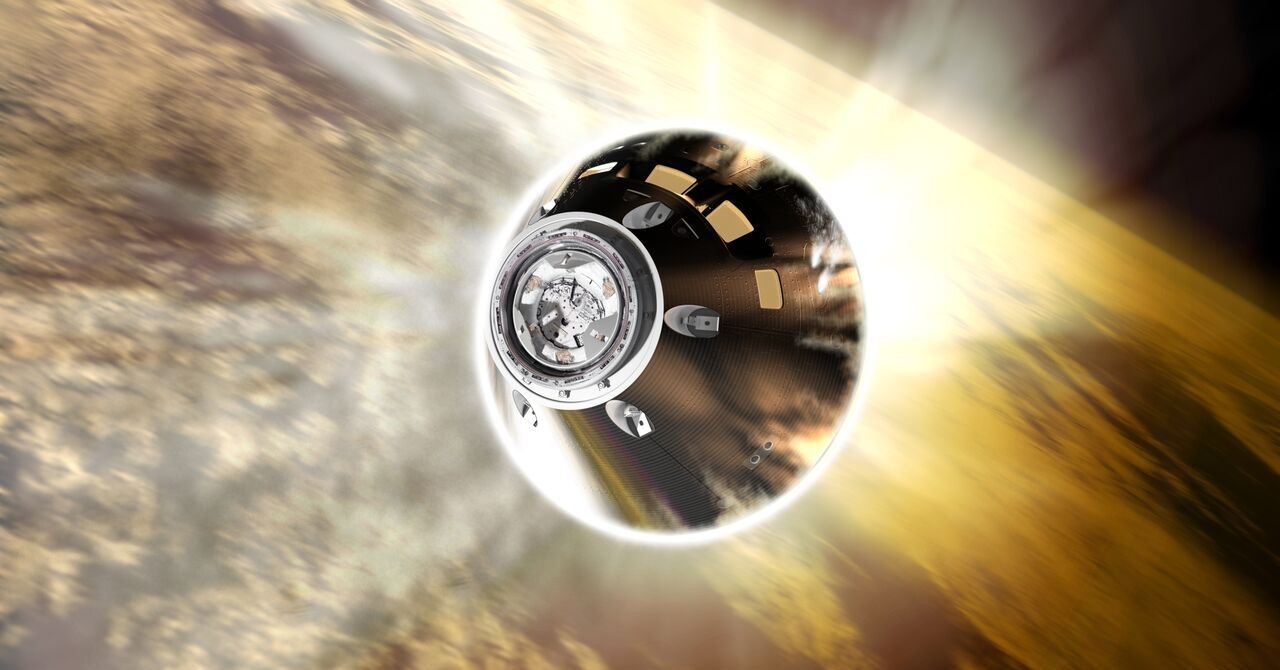
The most critical phase of the mission lies ahead: the return to Earth. While launching into space is a triumph of propulsion, returning from deep space is a triumph of thermal engineering. The spacecraft must endure extreme heat during reentry to ensure a safe splashdown.
NASA is scheduled to livestream the homecoming, which is expected to take place on a Friday evening. This final stage will determine if the systems tested during the lunar flyby are truly ready for the much more dangerous descent required for future Artemis missions that intend to land on the Moon.
Why This Matters
The Artemis program is not merely about visiting the Moon; it is about answering fundamental scientific mysteries and establishing a foothold for future Mars exploration. By testing the limits of human endurance and spacecraft durability through Artemis II, NASA is building the blueprint for a permanent presence in the solar system.
The success of the Artemis II flyby confirms that humanity is no longer confined to Earth’s immediate orbit, but is capable of navigating the vast distances of deep space.